Sign up to hear about new releases and other exciting news from Annie Bellet.

Author Archive

Neo-Pro Interview #2

And we’re back! I’ve been letting blogging slide in the interests of finishing a novel (I’m about to mail query packages and would hate to get a full request and have to scramble, so getting this novel done is first priority). But now I have another neo-pro interview for you. Enjoy!

Brad R Torgersen Interview

Who are you?  What’s your genre/history/etc?

Brad: Brad R. Torgersen, full-time nerd, part-time soldier, and night-time writer.  I came into science fiction and fantasy through the usual routes: Star Wars and Star Trek, both on the screen and in novelizations.  In my early teens I got into techno-thrillers, but eventually drifted over to original fantasy in the form of David Eddings and Stephen R. Donaldson, as well as original science fiction like the “Sten” books from Allan Cole and Chris Bunch.  Ultimately, I read Larry Niven’s two omnibus volumes, “N-Space” and, “Playgrounds of the Mind,” at which point my whole fan paradigm got rickrolled.  I came up for air and said, “I want to be like Larry Niven!!”  That was in 1992.

What’s your Race score?

Brad: My Race score tends to hover in the teens, with occasional spikes into the 20s.  My goal is to try and drive it up into the “pro-zone” that Dean Wesley Smith talks about: 80 points or higher, but it’s possible I may sell too often to get it that high or keep it there.  Especially in the new universe of electronic self-publishing.  I liked your article you did on that with Amanda McCarter by the way.

When did you “get serious” about being a writer?

Brad: I got “serious” in 1992… the first time.  I’ve gotten “serious” several times since.  The best and most recent period of “serious” began in 2007 when I went back to work on my short fiction and begin to deliberately attempt winning Writers of the Future.  There were many stops and starts between 1992 and 2007, and if I had to advise anyone, I’d advise them to not be so herky-jerky about their effort, the way I was.

What are your goals with your writing?

Brad: To pay off my house, put at least $500,000 in the bank, and quit my day job.  In that order.  That might sound rather mercenary, but the truth is, part of what made me get “serious” in 1992 was that I realized Niven was getting paid to do what I’d been doing for free on the dial-up bulletin boards for a couple of years already: write science fiction (and occasionally fantasy) stories and books.  Once I decided that merely writing for fun was not enough, I switched over to looking at it like a business prospect.  Now that I am selling, the business aspect is very front-and-center for me, beyond simply finishing books or stories.

Where do you see your career in 5 years?

Brad: It’s tough to say because there is no single road to anywhere in this racket.  Just because I’d like a thing to be true by 2016 doesn’t mean it will be.  However, if past paths of Writers of the Future winners are any indicator, if I bust my tail and get numerous manuscripts written, in five years I should probably have some novels sold and/or published, additional short fiction sold and published, and be generally working as a new “mid-list” man in the genre.  Not a bad place to be.  Going beyond mid-list is almost entirely up to the market and audience taste.  No way for me to guess how that may shake out.  I could crash and burn, or wind up on the New York Times list.  Or maybe be an e-publishing breakout success?  It would be nice, but I can’t count any of those chickens yet.  I don’t even have the eggs!

Do you have a particular story or idea you are dying to write? Or, if you could write a tie-in to any established universe/franchise, what would it be?

Brad: Back in 1992 I daydreamed of writing a 5-book supernovel series in the Star Trek universe, detailing the exploits of Captain Sulu and Captain Chekov.  I’d written numerous chapters on a fanfiction along these lines.  Now?  Now, I’d love to dabble in Larry Niven’s universe via the Man-Kzin Wars, with Baen.  And I am currently collaborating with award-winner Mike Resnick, which is a whole unexpected but very welcome bit of fun.  As for original projects, I would very much like to write an original science fiction series with the audience penetration of “Ender’s Game” and those books, or perhaps a rigorous military fantasy series.  My imagination goes all over the place and I know I can’t write it all.  I just have to hope one of these projects, somewhere, connects with enough people to earn me a following and (hopefully) a decent amount of money.

What are your hobbies outside writing?

Brad: Hobbies?  I have given up many of them over the years, to be a Dad and to get “serious” about writing.  Now and then I find a video game I like, though I haven’t played anything more modern than the TRON 2.0 game (from 2004) or the MECHWARRIOR game from before that.  Once upon a time I used to scratchbuild starship models from paper, glue and cardboard.  That was a lot of fun.  Again, just can’t seem to find the time for it these days.  Maybe when I am a big famous published author guy?  But then, Kevin J. Anderson doesn’t seem to have time for hobbies either.  He he he.

*(Nobu sez: squee moment… Mechwarrior 4 is one of my all-time favorite games!)

What’s your writing process like?

Brad: I am still trying to form a process, actually.  Left to my own devices I am a “burst” person, with periods of intense writing and then long troughs with little or no writing.  This is my “hobbyist” writing habit on full display.  Currently I am trying to teach myself to put down words every single day, whether I want to or not.  I’ve arranged my schedule so that every night come hell or high water, I am doing one hour before bed.  Whatever words I can cram onto the page.  It’s not the most inspired way to go about it, but in truth, the stuff I write when not inspired and the stuff I write when totally inspired winds up reading more or less the same.  Hat tip to Dean Smith on that truth, as you well know.

What’s been toughest about your journey so far as a writer?  How do you keep yourself going?

Brad: The toughest part has been ignoring the odds and the self-doubt.  The odds are terrible.  Just awful.  Anyone coming into commercial fiction because they think the odds are good is fooling themselves.  The odds are putrid.  Which is a big reason it’s always tough for me to keep my wordcount and morale up, even after breaking in.  Having climbed one “mountain” there is a whole Himalayan range ahead of me.  Do I really want to keep doing this??  Surely there are better and/or less crazy ways to make good money and have fun.  But I long ago consigned myself to this goal: of becoming a successful, well-paid science fiction and fantasy writer.  It’s been my deepest, most sought-after dream for almost 20 years.  Turning away or giving up is simply not an option for me.  So I slog on.  Not because I am especially inspired, but because I feel like if I quit now, I will be failing myself and my family, and I simply can’t do that.

Any tips or tricks you’ve figured out for improving your writing?

Brad:  Best “trick” I can offer anyone is to just read frequently, and perk up when you see something you like.  Doesn’t matter if you think it’s what will sell.  Ignore that impulse.  When you read a story or a book, and you say to yourself, wow, I really, really liked that, PAY ATTENTION!  Try to figure out what it was in the story or book that hit your “cookies” and made you like it.  Examine these things and try to figure out how to apply them to your own stories.  My novelette “Outbound” in the November 2010 issue of Analog Science Fiction & Fact was like that.  I’d read a wonderful novelette called, “Arkfall” by Carolyn Ives Gilman, and I really sat up and tried to figure out what in that story worked so well for me.  When I sat down and did “Outbound” I had “Arkfall” kind of simmering in the back of my brain, as both template and inspiration.  Both stories are very different in specifics, but I think they have strong, shared themes.  I think new writers could do well to examine their favorite work by their favorite authors, and without copying per se, try to pick apart what it is those authors are doing — the size and scale of the stories, the emotional impact, the types of conflict — and bring some of that to their own work.

And finally, got anything you want to pimp?

Brad: If I can pimp anything it would be my on-line project the Emancipated Worlds Saga.  It’s a big space-opera war story that I’ll be doing all year, with an eye towards consolidation and e-publication to the Kindle and other platforms by the end of 2011.  (Here’s a link to the Prologue)

Thanks for the interview Annie!  This was a lot of fun!!

——–

Thank you to Brad! You can follow him at his blog: http://bradrtorgersen.wordpress.com/
Science Fiction Novelette

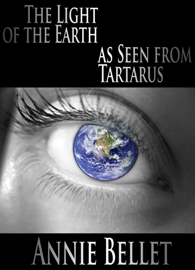
I have a near-future, hard science fiction novelette on sale now.

Ian and Jack Talley and the Prometheus Space Program set a record for the fastest manned flight to Jupiter. But the journey ended in disaster, crippling Jack and killing the rest of the team.
Ten years later, an eccentric multi-billionaire offers them all of his money, and a second chance, if they’ll fly him to Pluto. The Talley brothers reunite their team, ready to rekindle the dream of manned space flight. But self-doubts and technological issues both old and new appear, leaving the question open: are they making history? Or repeating it? And finding the answers could cost them far more than the Prometheus program.

Here’s the links to buy- (it’s only $1.99!)  Kindle (which hilariously has a reversed cover image, that will be fixed soon), Nook, and pretty much all other formats.

Now, back to writing this novel.  Enjoy!

Quickie Preview

Want to see what I’m working on?

Here’s a hint:

Now, I have to get back to it.  (This novel is going out to NY publishers while I finish the two sequels, so it might, if it sells, never make it to e-pub, but I had a cover made because visualizing something done helps me get it done.  Yeah, I’m weird).  Besides, this is awesome and I got almost 2,000 words written while my designer and I talked back and forth about it through the middle of the night.

Ebooks January

Hey, why not? I love it when other people talk frankly about the money, so I’ve made it my policy to do the same, for good or ill.  It’s tough starting a new business, which is what I’m doing with writing.  Today marks the two year anniversary to my “get serious about writing for a living” day.

In January I released a short fiction collection as epub and had my best month ever, earning a whopping $22.95 (whoops, forgot initially to count B&N and Smashwords into this, yay extra money).  Who knows if that’s a fluke or if it’ll pick up from here.  I’m planning on releasing a novel this month (if I ever get this other novel finished so I can have time for something other than writing).  Novels supposedly sell better than short fiction, so we’ll see.

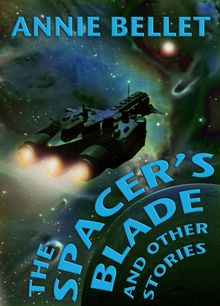
Also, I received an amazing review of my collection from Alex J Kane.  I’m sort of in awe of people who can write up their ideas and opinions on a work in a way that really talks about things instead of just being a “durr, I liked this” or “gah, can’t stand this”, which is what I normally end up thinking about things I read (I am the world’s WORST reviewer, which is why you won’t see many reviews from me, just recommendations on occasion).  Anyway, if you want to read the awesome review of “The Spacer’s Blade & Other Stories”, do so here at Alex’s blog.  And if you like what you read, well, I’m always up for having a better February than January any day.

And with that. Back to writing.  11 days left. Meep.

15 Days

This novel (currently standing at 7,300 words) is due on the 15th of this month.  15 days.  (I’m shipping out the query package tomorrow).  I need about 72,000 words more to have it be a decent (re: marketable) length.

15 days. 72,000 words. 4,800 words a day.  Go!

So yeah, I’ll probably be fairly absent from my blog for the next two weeks.  But some cool things are coming (more interviews, a fantasy novel released via Doomed Muse Press).  Meanwhile, I gotta write.

Neo-Pro Spotlight Interview #1

The Interview!

This is going to be the first in a hopefully long-running series of interviews with neo-professional writers. What’s a neo-pro? Someone who has started writing seriously, submitting seriously, and has a goal of making some or all of their living at writing, ie intends to be and/or has taken the first steps down the road to being a career writer.

It’s tough being a neo-pro. We might have a few sales under our belts, are likely getting more “nice” rejections than form letters, but we haven’t quite been here long enough to have the shine rubbed off. We’re past the “use correct submission format, follow guidelines, put ass in chair and write” kind of advice and into the deep end where there are only hints and no real, clear path, just hard work ahead. So I wanted to interview and spotlight some of the neo-pros I interact with (and hopefully I’ll meet more of us as I do this). While our paths may all look a little different, we’re all in this together.

And hey, this way I can say… “I knew that writer back when…”
So here’s my first victim writer interview.  Let me know in the comments if I missed a cool and/or obvious question that you’d like me to ask in the future.  Thanks!

Who are you?  What’s your genre/history/etc?
Tom:  My name is Tom Carpenter.  I have and will write just about anything I’m interested in, but I think my sweet spot will probably be fantasy and science-fiction since those forms suit me best (and it’s what I’ve most written so far.)  My day job is a Production Manager at Toyota which has kept me quite busy over the years.  Thankfully, I really picked up the old steam shovel and started working on my first novel when I was still in college.  I finished it a few years later but then got side-tracked by a few poor choices, kids, and insane amounts of work.  It wasn’t until I finished my MBA about four years ago that I realized I really do have time for writing…well actually, my lovely wife reminded me of that and I’m sure she’s regretted that decision a few times since (just kidding!  she’s amazingly supportive!)

What’s your Race score?
Tom: I’m currently at 48 which boggles my mind.  I was at zero about 1.5 years ago.  Granted, I had three novels I’d finished and was starting to write shorts, but it seemed daunting to make that score grow.  I started sending out the second and third novels (the first is not good enough by a long shot) and have been steadily increasing my score.  It’s strange to think that professionals are usually above the fifty level (though probably closer to one-hundred) and that I’ll hit that level soon.  Granted, I haven’t sold anything yet, but I feel like it’s coming.

When did you “get serious” about being a writer?
Tom: After the MBA.  I also gave up my World of Warcraft addiction.  It’s amazing how much time there is to write when you’re not obsessively playing games.

What are your goals with your writing?
Tom: I’d love to say getting published, but I can’t control that.  So I’ll stick to my 2011 targets: above 50 on race score (close!), 300,000 words written, over 100 rejections (close!), and over a 20 on eRace.  I’m also planning on editing and producing a yearly anthology about augmented reality (more details in a few months!)  The world of epublishing feels so amazingly freeing.

Where do you see your career in 5 years?
Tom:  I’m sure I’ll still be working for Toyota at least until the kids are in college.  If at that time, I’m making enough to safely leave?  Then I would take that chance, but until then I’ve got two jobs.

Do you have a particular story or idea you are dying to write? Or, if you could write a tie-in to any established universe/franchise, what would it be?
Tom:  Oh jeez.  I have so many ideas for novels that it’s hard to pin that one down.  Every project I start seems like the greatest thing ever when I’m writing it.  So really I’m always dying to write, what I’m currently writing.  I would love to work with other authors on some projects though.  Either ones of my devising, or maybe something like George RR Martin’s Wild Cards series.

What are your hobbies outside writing?
Tom: We’re allowed other hobbies?  Seriously, if I had time, I would still play computer games.  I do occasionally get together with friends and play cards or other nerdy games, but it’s too far and few between.

What’s your writing process like?
Tom: I have weekly goals for word count that I expect myself to meet.  If I’m ahead on other weeks, I will allow myself a little slack, if for a good reason, but otherwise I’m a slave to the targets.  I always write on Sat and Sun morns, but try to fit in one or two nights during the week.  I also do a lot of thinking during the work drive, or when I go running with the dog on the weekends.  Overall, I’m extremely taxing on my muse, expecting her to perform whenever I demand (read my post about creativity to understand that statement: http://thomaskcarpenter.com/2010/12/05/the-myth-of-creativity/)

What’s been toughest about your journey so far as a writer?  How do you keep yourself going?
Tom: When I finished my first novel I got an agent and she scammed me out of $300.  I was devistated at the time, but now I consider that money well spent, because that small amount (compared to what some authors lose) opened my eyes to the unregulated world of agents.  As for keeping going now?  I was an undisciplined youngster when I wrote my first novel.  I actually think my time in Toyota has helped me become more focused and capable of meeting difficult targets.  It has felt like a long strange trip though, and while that first big sale (magazine or novel) will be exciting, I think I’ve also reached the point that I know its just another step on a long and daunting staircase.

Any tips or tricks you’ve figured out for improving your writing?
Tom:  Listen to people with more experience than me (I recommend Dean Wesley Smith and Kris Rusch).  Otherwise, I’d just parrot the usual advice you get from pros: read a lot, write a lot, write even more, send that stuff out and go back to writing.

And finally, got anything you want to pimp?
Tom: I jumped on the self-pub bandwagon and recently put out a novel I’m very proud of: The Digital Sea.  I also write for a tech blog about augmented reality called Games Alfresco (www.gamesalfresco.com) and I have my author website where I talk about augmented reality, writing, tech stuff and the robot apocolypse.
It’s an exciting time to be a writer!  Thanks for sharing me with your readers.

*Big thanks to Tom!*


The Streak Begins

So the writing in shifts thing has been working out pretty good except for one tiny issue.  I keep working on one thing.  Despite my brain being fully capable and willing to write two (or ten) things, apparently once I get into my groove, it wants to finally settle down.  That’s not a bad thing at all.  I am learning my limitations, however.  Like that it takes me realistically six weeks instead of four to write a novel because I like to goof off and procrastinate and do all manner of things that aren’t writing.  Or that I don’t really like working more than 4 hours a day (some days, I do.  Some days the words and flowing and I’m on a roll and don’t want to stop, so I don’t).  Four hours (broken up into a couple shifts) of writing brand new fiction feels pretty good.  I usually get 3-5k words done in those four hours, which is a totally acceptable pace for my goals.

So I’ve decided to start a streak, a writing streak.  I’m going to write every day for at least 20 minutes.  I find writing is like exercise, I don’t necessarily feel up to it instantly, but usually once I’m doing it I feel pretty good and want to keep going.  I’m usually less focused and more distracted on weekends (weekends being when my husband and cat and stuff want my attention most).  But I’m going to keep my streak up.  Every day. Every. Day. 20 minutes minimum.

I’ve also decided what I’m going to do during my streak.  I’m going to focus my efforts this year on the various novel series I already have going.  I’ve set up a calendar of novels and deadlines because I work best to deadlines.  Most of these books are already outlined.  I intend to use weekends for short story writing so that my short story submissions don’t fall behind and because shorts are awesome.  One and done.  One day (sometimes two) and I’m finished.  They are very satisfying.  When stuck in the middle of a novel, it is nice to remember what finishing something feels like, so I like to do short stories to mix things up.

So here’s the rough deadline schedule:

Wrath (Pyrrh Considerable Crimes Division Book 2): March 19th

The Raven King (Cymru that Could Be: Book 2): April 29th

Delilah in Paradise: June 10th

Beyond Casimir (Lorian Archive: Book 2): July 22nd

Casimir Rising (Lorian Archive: Book 3): September 2nd

Hunger (Pyrrh Considerable Crimes Division Book 3): September 23rd

The City is Still Hungry (A Remy Pigeon mystery): November 4th

Vainglory (Pyrrh Considerable Crimes Division Book 4): November 25th

Delilah in Hell: December 30th

The Slow Beat Down (A Remy Pigeon mystery): February 10th, 2012

Sindra’s Storm (possibly a duology): March 23rd, 2012

So that’s the schedule.  Unless, of course, a giant wrench gets thrown in it due to either success (like a contract or two) or disaster (but hey, I could still type in a hospital bed, so I’m good, right?).  And of course keep the streak up and hopefully get 52 stories written and submitted.  I’ve done two shorts so far this year.  I’m a little behind.

Go go gadget streak writer *grin*

E-book Pricing

All right.  I’m going to take a stab at this issue.  But first, a lot of caveats.

1) I don’t think that price, once under a certain threshold, matters as much as a lot of “indie” authors think it does.  My personal feeling is that time is better spent writing more books and doing some targeted marketing (like sending out review copies) than messing around with price on books.

2) My personal threshold for ebooks is that the price be below the available paper version’s cost (ie if the book is out in hardback for 27, the ebook should be less than that (I prefer under 10 bucks, but I’ll pay up to 15 for an ebook I really, really want if the paper version costs more).  If the book is out as a paperback for 7.99, the ebook should be less than that, say 6.99 or something).  I am perhaps still clinging to my love of paper books on this, however.  Personally, as someone who buys a good amount of books, that’s my threshold.  If I want a book RIGHT NOW but it is two bucks more for the Kindle version than the paper one, well, I generally hold off and either order the book or go to a bookstore.

3) All that said, when you become a publisher, which is what putting your own books out yourself or with the help of a start-up small publisher (ie a conglomerate of your friends, which is what mine is), you do have to price your books somewhere and decide on a range and general guidelines so that you look consistent and your readers know what to expect.  You have to pick a price with each new title and it helps, I think anyway, to have a basic idea of where you are pricing things.

4) Basically what I found is that ebook pricing varies a great deal and it varies a lot by genre (not as much by length, once you get away from short stories.  I found plenty of novellas priced more or less the same as novels, for example).  In an ink and paper bookstore, books are priced (unless on sale or sold used) by the format.  A hardcover will always be in the 24.99-28.99 range no matter the genre.  If I walk to the Mystery section and pick up a mass market paperback, it will likely be 7.99 (sometimes 6.99, but usually these days 7.99).  I can then walk over to Science Fiction and pick up a mass market paperback and it will also be 7.99.  Ebooks are different and I find that very interesting.  I don’t know what it means yet, if anything, but I do think that I’ll be looking at pricing more by genre than any other factor.

So for my totally unscientific study, I decided to look at the genres I’m planning to put out books and stories in and see what the pricing looked like.  First I checked the top 100 bestsellers in each category and marked down where the prices fell for those.  Then I did a very, very rough general price look-up to see where the numbers of books in each price range fell in each genre.  Again, these numbers were as of yesterday and are not exact.  This is just a rough overview, not a deeply scientific study.  All of these are Amazon.com only.  I haven’t looked at B&N pricing, though I might, nor have I looked too much at Smashwords yet.  So far all but one of my sales on my tester short stories have been through Amazon (Amazon.uk accounts for most of them, strangely. I guess they like literary short fiction?), so that’s what I studied first since for the moment, they still have a large portion of the ebook market.

Here’s what the rough breakdowns looked like:

Romance top 100:  43 books priced between .89 and 2.99, 27 books between 3.00 and 5.99, 19 priced between 6.00 and 7.99, 8 books priced between 8.00 and 9.99, and the remaining three priced over 10.00.  The rough pricing distribution among all Kindle books in the Romance category was about 3,250 in the .99 to 2.99 range, 3500 in the 3-4.99 range, 4050 in the 5-9.99 range, and 1200 priced over 10.00.    So the bestselling books are definitely weighted to the lower end of that, for whatever it means (correlation is not causation, after all).

Romance novellas (what I plan on writing, so I did this sub-category even though it isn’t really one even on Amazon) broke down roughly like this (I only looked at top 100 for this category):  There were 18 novellas priced at .99, 7 novellas priced 1-1.99, 31 novellas priced 2-2.99, 17 priced 3-3.99, 11 priced 4-4.99, 7 priced 5-5.99, and the other nine were price over 6.00.  These are of course a self-selecting category since if the publisher didn’t identify the book length as novella, it wouldn’t have shown up using the search parameters I used.

Mystery top 100:  36 books priced between .89 and 2.99, 6 books priced between 3.00 and 4.99, 22 priced between 5.00 and 6.99, 25 priced between 7.00 and 8.99, 8 priced between 9 and 9.99, and the remaining three priced over 10.00.  The rough pricing distribution among all Mystery books on Kindle (and it is by far the biggest genre category I looked at) broke down roughly like this:  7,050 books priced .99 to 2.99, 6,400 priced 3-4.99, 7,100 priced 5-8.99, 4,700 priced 9-9.99, and 3,400 priced over 10.00 (the bulk of that priced between 10 and 20 dollars).

Police Procedural subgenre of Mystery top 100:  25 books priced between .89 and 2.99, 8 priced 3-4.99, 49 priced 5-7.99, 15 priced 8-9.99, and the remaining three over 10.  The general pricing breakdown for all books listed under Police Procedurals was 546 priced between .89 and 2.99, 264 priced between 3 and 4.99, and the bulk of the rest priced in the 5-7.99 range.  I wasn’t able to get good numbers on this due to the way I was searching (Amazon kept mixing in prices that weren’t in my search designation, probably due to their discounting? I’m not sure).  My rough look though showed a great deal of the books in this category listed at 6.99 and 7.99.

Science Fiction top 100: 39 books priced between .89 and 2.99, 10 priced between 3-4.99, 29 priced 5-6.99, 19 priced 7-9.99, and three over 10.  The overall breakdown was approximately 1,600 books between .99 and 2.99, 700 priced 3-4.99, 290 priced 5-6.99, 550 priced 7-9.99, and about 300 over 10.00.

Fantasy top 100: 29 books priced .89-2.99, 8 priced 3-4.99, 43 priced 5-7.99, 11 priced 8-9.99, and the remaining nine priced over 10.00.  The overall pricing looked like this: 1,500 books priced .99 to 2.99, 1300 priced 3-4.99, 2,200 priced 5-9.99, 300 priced between 10 and 20.

So that’s the basic data I collected.  My searches, other than the novella one, did not weed out short stories or take length into consideration at all.  I looked at genre numbers and pricing and at the top 100 bestseller lists at the moment of the search.  That allows for a lot of variance and other factors in this, but I just wanted a rough overview of pricing on ebooks.

What have I learned and/or decided?  Genre does seem to matter.  Science Fiction and Romance both had lower trending prices than the other genres I looked at.  There also seems to be a strange “deadzone” in the 3-4.99 range on a lot of those top 100 lists that isn’t always reflected in the number of books priced there.  Are readers avoiding books priced in that range?  Could the .99-2.99 book buyers be a whole different set of buyers than the 5.00 and up crowd?  I’ve noticed from looking at Amazon’s “customers who bought this also bought” sections that people who’ve bought .99 books tend to buy a lot of other .99 books.  I’m not sure what that means, if anything, but I think it is interesting to think about.  When I’m selling my books, who are my targeted customers?  I joke with my friends that the only thing I look for in a reader is recidivism.

I think when I put books up for my small press, I’ll definitely be pricing by genre and using what I’ve found in this data to decide.  For Romance, and specifically Romance novellas, it seems as long as I stay in the 2-4 dollar range, I’m right in the expected price range given the pricing of books on the bestseller list.  For the Fantasy Police Procedural books (yeah, that’s crossing genres, yay ebooks and being able to put things under more than one category), I think I’ll aim for the 5-6.99 range.  For straight mystery, probably aim at the same range.  For Science Fiction the price trend seems lower, but I don’t want to be in the 3-4.99 deadzone either.  More books in Sci/fi were priced in the 5-9.99 range than below 2.99 (48 vs 39), so I’ll probably take a chance and position the books on the lower end of the higher range.  Short story collections seem like an all over the place no-man’s land and I wasn’t even able to get good data on them, so I’ll probably go with genre pricing on those.

Again, no one really knows how ebook pricing will shake out or where the various prices will settle.  Length might become more of a factor, but it is difficult to see how long a book is on the Kindle. File sizes and location numbers can be way off based on things other than book length.  I’m going to make sure that if a book is less than 45k words or so that the descriptions reflect this so a reader knows they are buying a novella or short stories, etc.

But in the end, the price matters a lot less than other things.  If the books I publish aren’t any good and aren’t packaged well (good covers, good descriptions, good samples), they won’t sell at any price.  That’s what I’m going to focus my energies on.  More books, better books, great packaging.

New Plan, Same as Old Plan

Well, mostly the same as the old plan.  I’ve noticed that one of my issues with writing is that I have too many ideas.  I don’t get the traditional form of writer’s block (ie not knowing/having anything to write about), but I get the reverse of that.  And it does slow me down and sometimes stop me entirely.

What I’ve noticed the last couple months is that I write in shifts.  I’ll write for an hour or two and then take a break (breaks often lasting a couple of hours) and then go work again.  Starting today, I’ve decided to try to use that to my advantage.  I have so many stories in my head right now that I feel like I’ll never get them all out.  I have a novel almost done and one started that literally needs to be done by Feb 1st in order to make a workshop deadline.  If I write in shifts, I should be able to finish both.  So for the rest of this month, I’m going to try that method out.  Work on one in the morning and one in the afternoon/late at night or whenever the second “shift” happens.  I know I can keep the stories straight in my head because my head is juggling about 20 different novels and short stories at the moment including these two.  Hopefully doing things this way will prevent the “but I want to work on this instead” block, because I’ll just go work on that instead.

And hey, if this works, then I’m going to keep assigning shifts to projects and see how writing multiple things concurrently pans out.  I’m still adapting my process and finding ways that work for me.  I fully intend to try different ways of outlining novels as well at some point this year (that Snowflake method looks interesting, for example).

So that’s the new plan, which is pretty much the same as always.  I’ve got a lot of writing to get done (about 90k words) in a short amount of time.  But if I finish it or even get close, I’ll have finally gotten my 100k words in a single month.  Which is pretty cool (I’ve written about 30k this month already).